|
|
|
|
The best of 2025 and the road ahead. The topic of AI, naturally, showed up in one way or another during every single NeuGroup peer group meeting and scores of virtual sessions last year—and is the background or focal point of much of what founder and CEO Joseph Neu will be watching in 2026 (see below). But a look at the 10 most-viewed content posts in 2025 (also below) makes clear that amid the push to find AI uses cases, treasury and finance teams remain hyperfocused on the details of risk management, banking, liquidity and capital raising.
- This year, NeuGroup looks forward to documenting the extent to which treasury can meaningfully use generative and agentic AI to improve efficiency and effectiveness, and enable functions within the Office of the CFO to solidify their roles as strategic business partners bringing demonstrable economic value to the enterprise.
What Joseph Neu is watching in 2026. Here are half a dozen themes expected to gain momentum the next 12 months:
- Rising pressure to reduce SG&A expenses will compel finance teams to do more with less, driving headcounts lower.
- Efforts to improve the tech plumbing bringing clean data into AI models and automation tools that support decision-making will shift the focus away from traditional Office of the CFO systems like TMSs and ERPs.
- AI-powered cash models will enable treasury to move beyond forecasting to finding sources of additional free cash flow that drive business growth.
- Analysis of an enterprise’s risk exposure profile using digital twins that monitor and manage risk will allow finance teams to reduce buffer capital and liquidity needs, thereby improving risk-adjusted return on capital, RAROC.
- Expect the introduction of AI agents capable of opening and closing bank accounts and moving funds from one bank or non-bank institution to another—with human oversight. What's more, the agents will promote fund flows that optimize global liquidity and mitigate trapped cash.
- AI assistants will allow a treasurer rotating through the function to perform like an expert—reducing the need for an all-knowing AT. The same applies for heads of FP&A. Ultimately, finance generalists aided by AI may master enough domains to be CFO.
Top-performing NeuGroup Insights 2025 posts. Here are the ten pieces of 2025 content (seven articles, two videos, one podcast) read, watched or listened to by the greatest number of people. The list reflects the times we’re in (private credit, tariffs, the yield curve), perennial treasury issues (bank account management, FX hedging, cash investment) and includes three articles initiated by sponsors that clearly resonated with readers.
Sign up for this email here, and subscribe to the Strategic Finance Lab podcast on Apple or Spotify.
|
|
|
|
|
|
|
|
|
|
|
Apollo’s Adam Kostrinsky explains how investment-grade corporates are using private credit to fund strategic objectives, long-term growth and balance-sheet flexibility.
Private credit’s rapid rise is reshaping corporate finance. Once a tool for middle-market borrowers, it’s now a mainstream funding option for investment-grade companies seeking customized, long-term capital solutions.
- That shift—and what it means for treasury—is the focus of the newest episode of the Strategic Finance Lab podcast, featuring Apollo Global Management COO of Global Origination Adam Kostrinsky. The episode, sponsored by Apollo, is available now on Apple and Spotify.
- Mr. Kostrinsky tells NeuGroup’s Justin Jones that many corporates are turning to Apollo for large-scale, long-duration projects—from energy transition to data centers—because the firm can “really be a long-term partner, offering differentiated financing solutions” that extend beyond the typical time horizons available in public markets.
To read the full story, please click here.
|
|
|
|
|
|
|
|
|
How treasury teams making share of wallet decisions evaluate banks based on quantitative and qualitative measures.
One treasury team tallying up the fees it pays banks in exchange for their commitments to the company’s revolving credit facility recently added a new category to its bank scorecard: deemed compensation on cash. Calculating it involves comparing the interest rate the corporate receives on cash held at a given bank to a benchmark rate such as fed funds.
- A member of NeuGroup for Global Cash and Banking explained the change at the group’s fall meeting in San Francisco in a broader discussion about bank scorecards, which some treasury teams use as they make share-of-wallet decisions. That’s the slice of the total pie of fees a company pays individual banks for being in their revolver.
A comprehensive scorecard. In addition to deemed compensation, the member’s scorecard tracks the fees the corporate pays to banks for capital markets transactions, custodial services, trust services, FX, the revolver, payment processing fees and other charges.
- “We total all that up and compare it to the revolver facility for each bank,” the member said. “Then we gauge what should their wallet share be. Then, are we over or under? And some of that is business driven, but some is more in our control.”
- The scorecard impressed other members, several of whom mentioned its comprehensiveness. One called it “super cool” and another said, “I wish we had that as well.”
To read the full story, please click here.
|
|
|
|
|
|
|
|
|
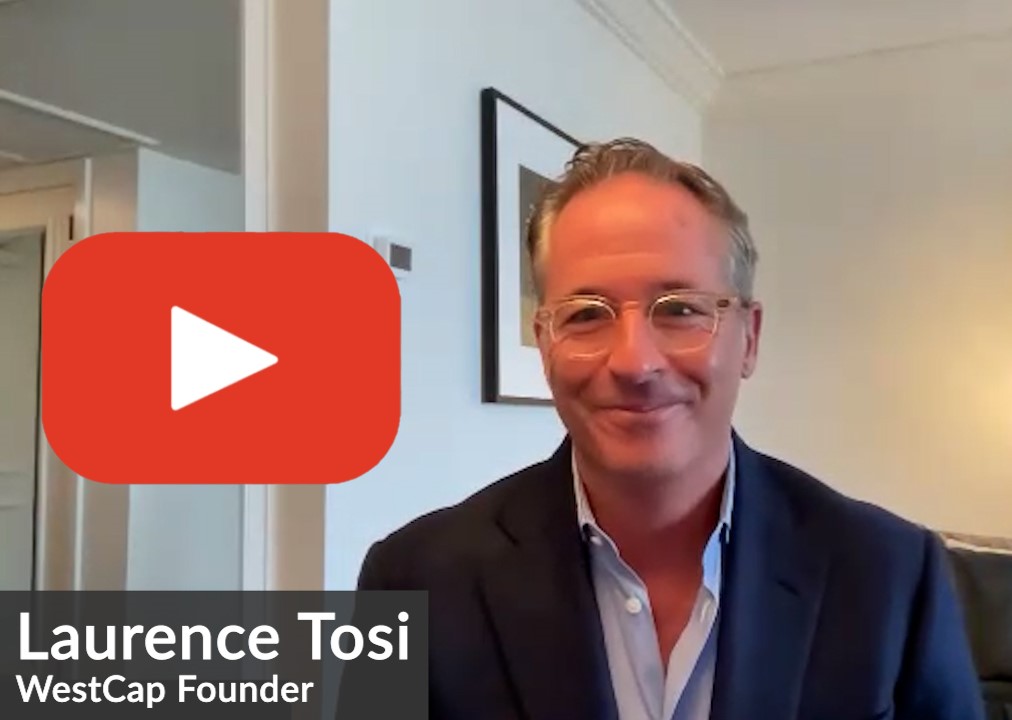
The WestCap founder joins Joseph Neu and Treasury4 co-founder Ed Barrie to discuss the importance of a treasury mindset.
Many modern treasury teams are being challenged to move beyond traditional roles and embrace new opportunities to create value. But treasurers at smaller or newer companies may first need to make the case for investing resources and time in treasury so the team can create value by optimizing the company’s cash and thinking more strategically about the flow of funds.
- That topic and others were discussed at a recent virtual session led by NeuGroup CEO Joseph Neu featuring WestCap founder Laurence Tosi and Treasury4 co-founder Ed Barrie. The conversation touched on how treasury can serve as a value-creation engine without introducing unnecessary risk by trying to be, say, a profit center.
- WestCap is a private equity firm that in 2023 led a $20 million funding round for Treasury4, a fintech developing finance and treasury solutions.
- In a video clip from the session you can watch by hitting the play button above, Mr. Tosi responds to a NeuGroup member who asked how a treasurer could encourage an inexperienced or reluctant CFO to embrace a treasury mindset. His answer begins with what tack not to take.
- The entire session featuring Mr. Tosi, Mr. Barrie and Mr. Neu is also now available as an episode of NeuGroup’s Strategic Finance Lab podcast, on Apple and Spotify.
To read the full story, please click here.
|
|
|
|
|
|
|
|
|
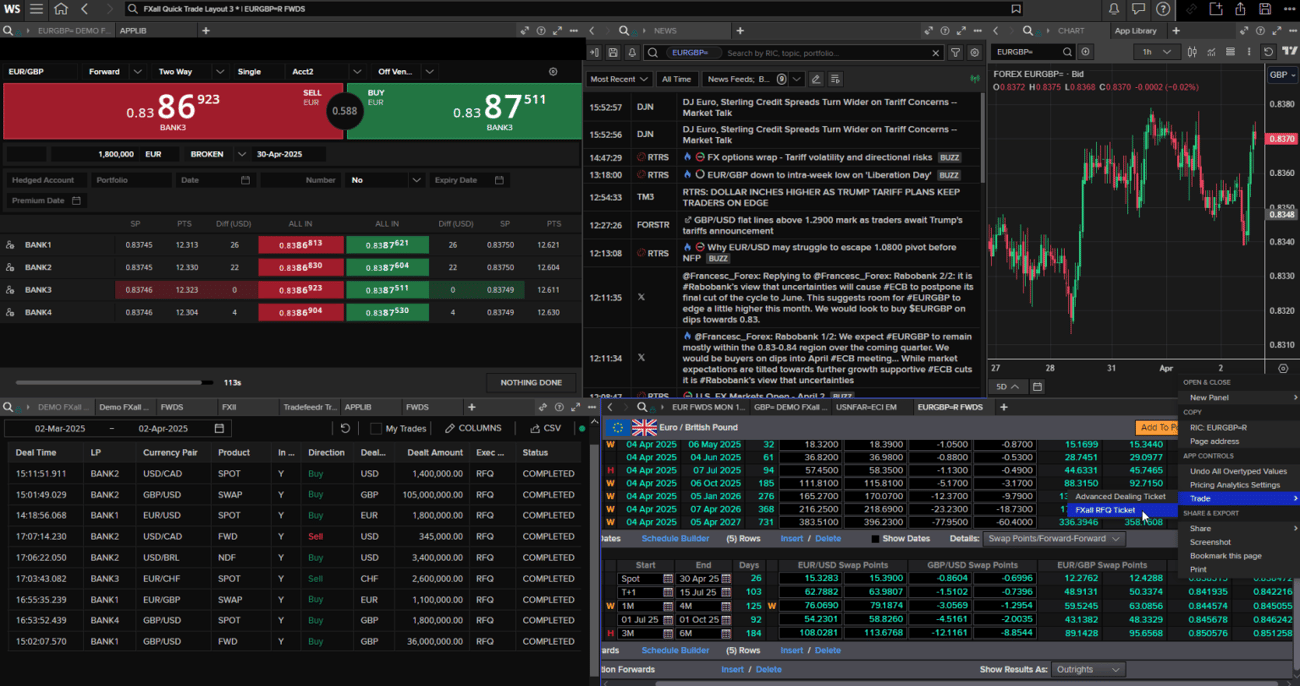
Some treasury teams are rethinking legacy workflows as LSEG’s Workspace integrates FXall to deliver pricing, execution and analytics in a single platform.
Faced with rising expectations to do more with less, some corporate treasury teams are taking a fresh look at long-standing tools—particularly expensive, subscription-based financial data and analytics platforms. At a time when efficiency, transparency and ease of integration are increasingly critical, some NeuGroup members are exploring LSEG Workspace (the evolution of LSEG’s previous workflow tool, Eikon) as a modern refresh.
- The platform now gives users access to a brand-new interface for LSEG’s FXall—a portal that 85% of respondents to a recent NeuGroup member survey say they use for electronic FX trading, and 70% for trade confirmation—bringing execution capabilities into the same environment as data and analytics.
- With a browser-style layout and breadth of content historically associated with entrenched data terminals, Workspace could be a viable replacement for some legacy systems, according to one NeuGroup member. He said this is because the platform has more robust FX functionality, and FXall is already connected to the company’s banks.
- “Efficiency is not about adding more tools,” said Alex Goraieb, LSEG’s head of FX pre- and post-trade Workspace workflows. “It’s about connecting the ones you already use and making the whole workflow smarter.”
To read the full story, please click here.
|
|
|
|
|
|
|
|
|
The benefits of a hedging method that may be underutilized by corporates managing FX risk in China and elsewhere.
The ability to hedge exposure to currencies onshore in China and other Asian markets instead of being limited to using offshore, non-deliverable forwards (NDFs) allows corporations to potentially reduce the costs of managing FX risk. That takeaway emerged during a presentation by MUFG at the NeuGroup for Tech Treasurers 2024 Tech Summit sponsored by the bank in November.
- “Having the setup so that you can access the onshore market when it is in your favor is absolutely something that we’re seeing more and more corporates do,” said MUFG’s Matthew Fennessy, Head of Global Subsidiary Sales and Acquisition Strategy in Asia.
- There are, however, challenges to overcome before you can take advantage. They include global time zones, know-your-customer (KYC) hoops and documentation of the transactions being hedged. These are among the reasons not all corporates make use of onshore hedging.
To read the full story, please click here.
|
|
|
|
|
|
|
|
|
NeuGroup Peer Research found treasurers see value in repo, but many avoid it due to obstacles that TreasurySpring’s platform is designed to overcome.
Repos, anyone? The likely answer to that question today from many corporate cash investment managers would be ‘no thanks,’ based on a recent NeuGroup Peer Research survey of members of NeuGroup for Cash Investments. Some of them discussed the reasons for that reluctance in a focus group sponsored by TreasurySpring, a fintech that operates a global cash investment platform that makes investing in repurchase agreements to reduce risk and generate investment income a less burdensome and thus more appealing option.
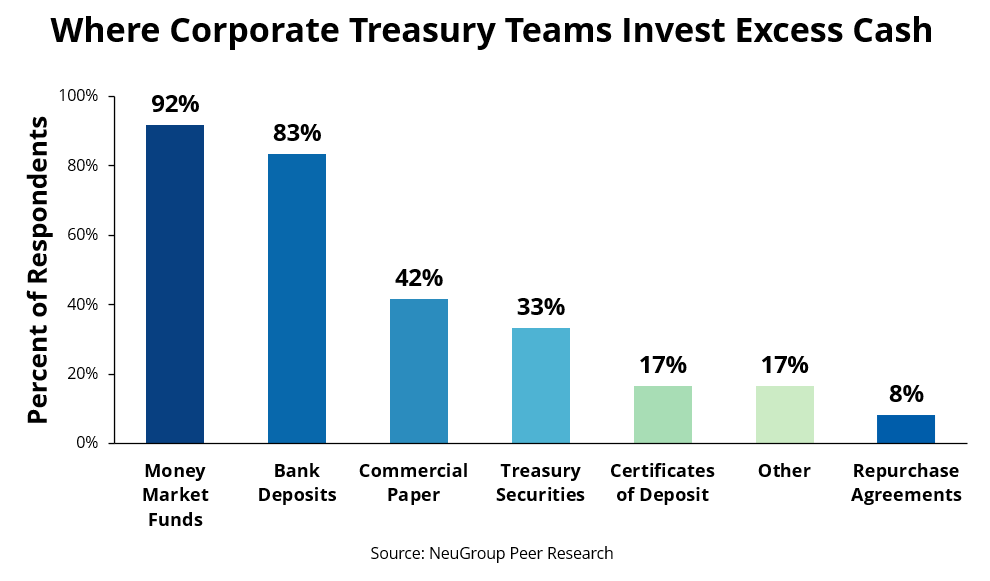
- NeuGroup’s targeted survey indicates that repos are used by just a small fraction of corporates: Only 8% of respondents said they turn to the repo market to invest excess cash (see chart above), compared to 92% choosing money market funds and 83% making use of bank deposits.
- “We’re always focused on preservation of capital first and then liquidity and then yield as a third option,” said one cash investment manager in the focus group, echoing the approach taken by the vast majority of peers.
- Repos are consistent with those priorities, TreasurySpring says, noting they offer corporates an opportunity to receive collateral against cash they lend, while bank deposits are wholly unsecured for amounts over the FDIC limit.
To read the full story, please click here.
|
|
|
|
|
|
|
|
|
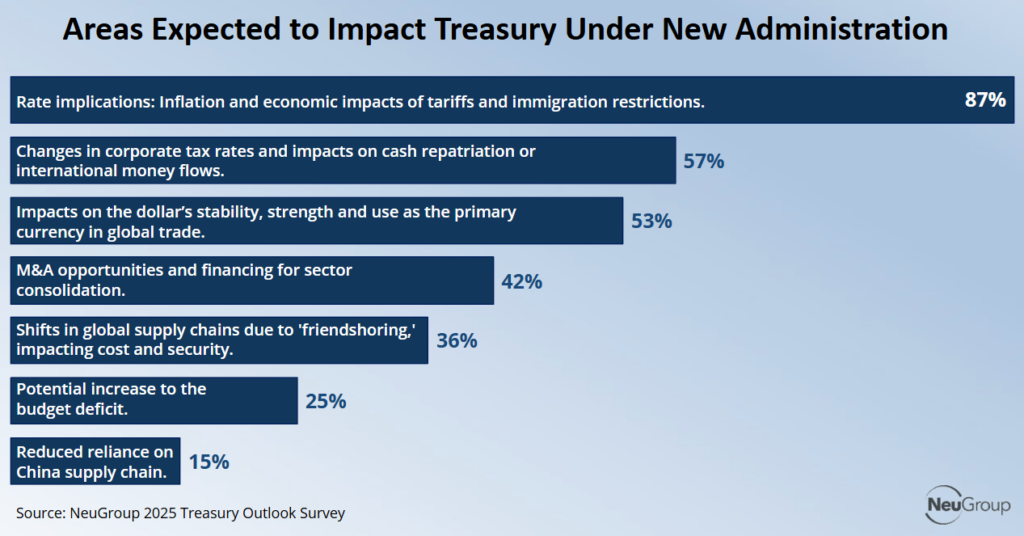
The effects of tariffs and changes in immigration policy on inflation, the economy and rates top the list of impacts.
President Trump’s announcement last Saturday of 25% tariffs on imports from Mexico and Canada seemed to confirm the expectations of the vast majority (87%) of respondents to NeuGroup’s 2025 Treasury Outlook Survey who said tariffs would have the greatest impact on them of any changes under the new administration (see chart above).
- “When he announced them over the weekend, it’s like everyone’s hair was on fire, and yet, we’ve been talking about this for months,” one treasurer at a mega-cap multinational told NeuGroup Insights.
- On Monday, Mr. Trump put the tariffs on Mexico and Canada on hold for 30 days. A 10% additional tariff on Chinese imports remains—at least for now (China retaliated).
- “The whole thing just leads to an incredible amount of uncertainty and unpredictability,” the treasurer said. While most corporates will wait before making major changes to supply chains, he added, “companies like ours are going to take whatever steps we need to take to get ready to ask for exemptions of certain goods.”
To read the full story, please click here.
|
|
|
|
|
|
|
|
|
Lyft CFO Erin Brewer on the benefits of hiring Matthews South to advise on a $460 million convertible bond deal.
Lyft CFO Erin Brewer recently described to NeuGroup members attending a virtual session the benefits of engaging a capital markets advisor, Matthews South, to help navigate decisions, strategy and bank negotiations to structure, schedule and execute a $460 million 5-year convertible bond deal in 2024 to refinance about half of an existing convertible coming due in 2025.
- The multistep Lyft transaction designed by Matthews South also included the purchase of a capped call to minimize potential dilution; a share repurchase to mitigate stock price pressure during execution; and the amendment of Lyft’s existing credit facility to ensure future financial flexibility.
- “The Matthews South team acted as a quarterback for the whole process, soup to nuts,” Ms. Brewer said during a discussion with Vijay Culas, the firm’s founder and CEO. “Making sure everything was on track and coordinating every piece of the work stream was being handled correctly. That was essential.”
- She added, “It’s not only advising me and playing quarterback, but it’s the expertise on documentation which made it easier on our accounting and legal teams to really streamline the workload that they had to carry as well.”
To read the full story, please click here.
|
|
|
|
|
|
|
|
|
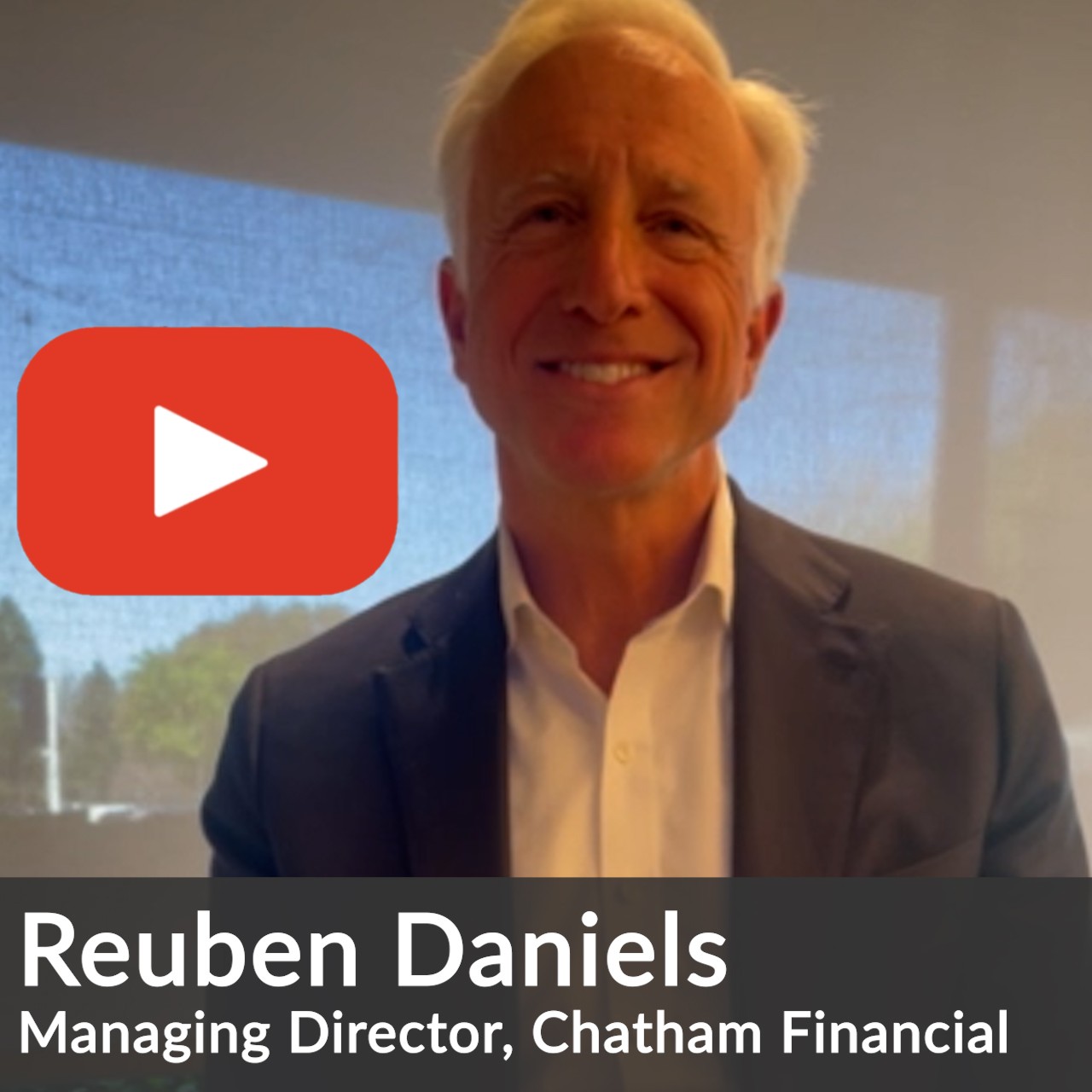
NeuGroup Video: Chatham Financial’s Reuben Daniels on the current curve and how investors view duration risk.
What does a U.S. Treasury yield curve that is neither steep nor inverted but looks something like the letter “u” mean for corporations that want to issue debt? Specifically, what does the u-shaped curve say about the appetite for risk and duration of fixed-income investors amid so much uncertainty about the economy, inflation and the Fed?
To read the full story, please click here.
|
|
|
|
|
|
|
|
|
Clearwater Analytics created a CP trade system built to one corporate’s specifications that other issuers can now use.
Finance leaders at a mega-cap tech company that is extremely active in the commercial paper (CP) market decided a few years ago to upgrade their system used to manage the end-to-end workflow and process of selling short-term debt through a Wall Street dealer network. They searched for solutions but concluded that no off-the-shelf tools could adequately handle the full life cycle of CP issuance planning, real-time execution monitoring, settlement and reporting.
So in 2023 they turned to a vendor that the treasury team knew well, a company trusted by this corporate and many other NeuGroup members that rely on its investment accounting and reporting platform: Clearwater Analytics.
The new CP tool ultimately built by Clearwater and launched last year—which other corporates can now use—is part of the solution provider’s strategy to expand the value its technology offers clients into new areas. It’s doing that through both acquisitions and innovation. And this month, the company changed its corporate name to CWAN.
To read the full story, please click here.
|
|
|
|
|
|
|
|
|
Following changes to Argentina’s FX exchange rate framework, members will assess the impact on dollar liquidity, peso inflation risk and capital controls. The session will explore the implications of the changes, discuss strategies for navigating heightened currency and regulatory risk, and provide a forum for sharing near-term responses from corporates with exposure to Argentina.
|
|
|
|
|
As treasury moves closer to real-time operations and AI use grows, better dashboards are becoming critical for cash visibility and faster, data-driven decisions. In this virtual session, members will share how they’re designing and leveraging treasury dashboards to drive insight and action.
|
|
|
|
|
In this virtual session featuring guests from HSBC and sponsor Kyriba, members will explore how finance teams are improving working capital management to navigate tariffs, currency shifts and market volatility. The discussion will cover practical ways to manage payables and receivables more effectively, support suppliers and use technology to increase visibility and control—highlighting how Kyriba’s solutions help companies build financial resilience in a changing environment.
|
|
|
|
|
|
|
|
|
|
|
|
|